Accounting Software Consultant UAE
26/09/2026
 YOUNG AND RIGHT
 From corporate tax registration to audits and bookkeeping, Young & Right offers personalized solutions that keep your business compliant and stress-free. Let’s take the complexity off your plate—starting with a free consultation.
Book Your Free Consultation
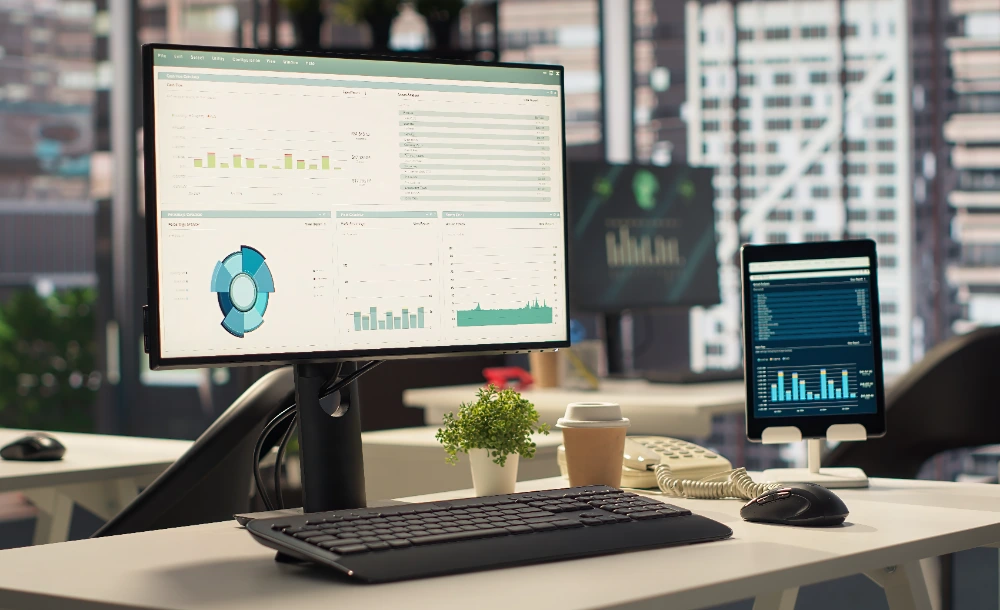
Managing business finances efficiently is essential for companies operating in the UAE. As a business grows, tracking sales, purchases, expenses, invoices, payments, payroll, inventory and taxes manually can become time-consuming and prone to errors.
Business Accounting Software UAE provides businesses with a digital way to manage financial transactions, automate accounting processes, generate reports and organise financial records. Modern accounting software can also connect accounting with other business functions such as inventory, payroll, CRM, sales and e-commerce.
For UAE businesses, software selection should also consider tax-accounting requirements. The Federal Tax Authority (FTA) has published requirements for tax-accounting software covering areas such as VAT-return information, tax invoices, credit and debit notes, reporting, internal controls, audit trails, and data archiving and restoration.
Business accounting software is a digital system designed to help organisations record, manage, process and report financial transactions.
Depending on the software, it can help businesses manage:
Instead of maintaining separate spreadsheets for different financial activities, businesses can use an integrated accounting platform to centralise financial information.
UAE businesses operate in an environment where accurate accounting records and tax-related information are important for financial management and compliance.
Accounting software can help businesses:
The FTA states that tax-accounting software plays an important role in helping taxable persons comply with tax requirements by capturing and providing accounting information for tax reporting.
A business accounting system should provide core accounting functions such as:
These functions provide the foundation for maintaining organised financial records.
VAT functionality is particularly important for VAT-registered businesses.
Accounting software should be capable of handling relevant VAT information and supporting processes such as:
The FTA's published tax-accounting software requirements include the ability to capture key data needed for VAT return files and support tax invoices, credit notes and debit notes.
For reference, the FTA currently states that the mandatory VAT registration threshold for applicable UAE businesses is AED 375,000, while the voluntary registration threshold is AED 187,500, subject to the applicable rules.
Professional accounting software should make it easier to create and manage business invoices.
Features may include:
The FTA specifically includes tax invoices, credit/debit notes and self-billed invoices within its tax-accounting software requirements.
Accounts receivable functionality helps businesses monitor money owed by customers.
A business can use the system to track:
Automated payment reminders can also help finance teams follow up on overdue balances.
Accounts payable functionality helps businesses manage supplier obligations.
It can track:
This provides better visibility into upcoming financial commitments.
Bank reconciliation allows businesses to compare accounting records with bank transactions.
The system can help identify:
Regular reconciliation can improve the accuracy of accounting records and help identify discrepancies earlier.
Businesses should be able to record and categorise expenses efficiently.
Useful features can include:
Digital expense management can reduce dependence on paper records and spreadsheets.
Business accounting software should provide useful financial reports rather than simply storing transactions.
Common reports include:
Management can use these reports to understand financial performance and support business planning.
For businesses selling physical products, accounting software with inventory functionality can be valuable.
Features may include:
Integrating inventory and accounting can reduce differences between financial records and stock information.
Businesses dealing with international customers or suppliers may need multi-currency capabilities.
These can include:
This can be useful for trading, e-commerce, consulting, import/export and other internationally connected businesses.
Businesses may also want accounting software to connect with payroll systems.
Integration can help transfer salary-related accounting information, including:
This can reduce duplicate data entry between finance and payroll teams.
Financial information is sensitive, so businesses should carefully manage who can access accounting data.
Useful controls include:
The FTA's tax-accounting software requirements include user hierarchies, multiple user profiles and different access rights.
An audit trail records changes and activities within the accounting system.
It can help show:
The FTA's requirements specifically address audit trails that allow auditors to understand the flow of events and, where necessary, reconstruct transactions.
Businesses should consider how their accounting data is backed up and retained.
Important capabilities may include:
The FTA requirements include archival and restoration mechanisms intended to preserve the integrity and readability of electronic records.
Cloud accounting allows authorised users to access financial information through internet-connected devices.
Potential benefits include:
Businesses should still assess security, access controls, backup arrangements and vendor support before choosing a cloud accounting platform.
Choosing software should start with the business's requirements rather than the software's feature list.
Consider:
A freelancer or small consultancy may need basic accounting, while a large organisation may require ERP-level functionality.
Trading, retail, construction, healthcare, professional services and e-commerce businesses can have very different accounting requirements.
Consider how many accountants, managers and employees need access.
Businesses with thousands of monthly transactions may require more advanced automation and processing capabilities.
Consider VAT functionality and whether the system can provide the accounting information required for applicable tax reporting.
Check whether the software can integrate with:
The software should ideally be able to support additional users, transactions, branches and business processes as the company grows.
Buying accounting software is only the first step.
A successful implementation can involve:
1. Requirements Analysis
Understand current accounting processes and identify problems.
2. Software Selection
Compare suitable solutions against the business requirements.
3. Chart of Accounts Setup
Create an accounting structure appropriate for the business.
4. Tax Configuration
Configure applicable VAT and tax-related settings.
5. Data Migration
Transfer relevant customer, supplier, transaction and opening-balance information.
6. Integration
Connect accounting with other business systems.
7. Testing
Test transactions, reports, workflows and tax calculations.
8. User Training
Train finance teams and authorised users.
9. Go-Live
Move the business to the new accounting environment.
10. Ongoing Support
Review system performance and make improvements as business requirements change.
Structured workflows and automation can reduce certain manual errors.
Businesses can monitor receivables, payables and available cash more efficiently.
Automating repetitive tasks can reduce the workload on accounting teams.
Management can access financial information through structured reports.
User permissions, approval workflows and audit trails can provide stronger control over financial activities.
Appropriately configured software can help businesses maintain relevant tax-accounting information.
A suitable system can grow alongside the organisation.
Young and Right provides accounting services for businesses in Dubai and the UAE and uses accounting software to help streamline financial operations. Its accounting services include bookkeeping, reconciliation, financial reporting, payroll, VAT reporting and audit support.
Young and Right also highlights the use of accounting technology to help businesses maintain financial records, reduce manual work and access financial information for decision-making.
For businesses implementing or improving their accounting systems, Young and Right can support the broader accounting process around the technology, including bookkeeping, reporting, reconciliation and tax-related accounting support.
Before selecting a solution, UAE businesses should check whether it provides:




Manage cross-border tax obligations with professional international tax consultancy in the UAE. Get expert guidance on international tax planning, transfer pricing, double taxation considerations, global transactions, and regulatory compliance.
Get International Tax Consultancy Support