Employee Salary Processing Services Dubai
24/10/2026
From corporate tax registration to audits and bookkeeping, Young & Right offers personalized solutions that keep your business compliant and stress-free. Let’s take the complexity off your plate—starting with a free consultation.
Book Your Free Consultation
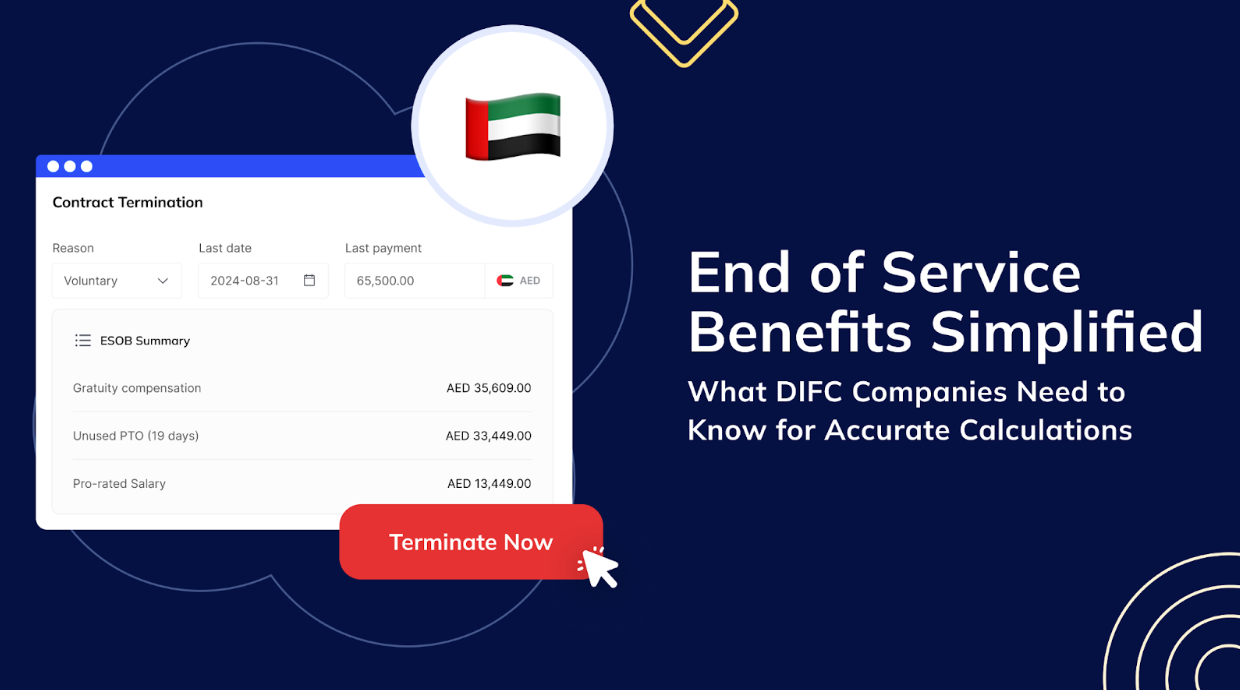
End-of-service benefits in Dubai are an important employment entitlement for eligible private-sector employees. In the UAE, gratuity is generally calculated using an employee's last basic salary and length of continuous service. The rules are primarily governed by Federal Decree-Law No. 33 of 2021 on the Regulation of Labour Relations and its amendments.
For employers, correctly calculating and settling UAE gratuity is an important part of payroll and HR compliance. For employees, understanding how gratuity works can help them verify their final settlement when their employment ends.
This guide explains end-of-service benefits in Dubai, how gratuity is calculated, who is eligible, what salary is used, payment timelines, and how businesses can manage their obligations with professional support from Young and Right.
End-of-service benefits are payments and other contractual or statutory entitlements due to an employee when an employment relationship ends.
For eligible foreign employees working under full-time private-sector contracts, the main statutory end-of-service benefit is gratuity. An employee generally becomes eligible after completing at least one year of continuous service.
The UAE Government states that UAE nationals working in the private sector receive end-of-service benefits according to the legislation governing pensions and social security, while the gratuity rules discussed here apply to foreign private-sector workers.
End-of-service settlement may also involve other amounts, such as:
Outstanding salary
Unused leave entitlements where applicable
Contractual benefits
Other amounts legally or contractually due
End-of-service gratuity
Employers should therefore treat gratuity as part of a wider final employee settlement process, rather than as an isolated payroll calculation.
Under the UAE Labour Law, a full-time foreign worker who completes one year or more of continuous service is generally entitled to end-of-service gratuity when employment ends.
Important points include:
Less than one year of continuous service: generally no statutory gratuity.
One year or more: gratuity entitlement generally applies.
Service beyond a full year can be calculated proportionately.
Unpaid absence is excluded when calculating the service period.
The calculation is based on the employee's last basic wage.
Total gratuity is capped at the equivalent of two years' wage.
The exact circumstances of an employee's contract and termination should always be reviewed before calculating the final amount.
For eligible full-time foreign employees, the UAE gratuity calculation is based on the employee's last basic salary, not the total salary package.
The standard calculation is:
The employee receives 21 days of basic salary for each year of service.
The employee receives 30 days of basic salary for each additional year of service.
The overall gratuity cannot exceed two years' wage.
Suppose an employee has:
Basic salary: AED 10,000 per month
Service: 4 years
Daily basic salary:
AED 10,000 ÷ 30 = AED 333.33
Gratuity for each year:
AED 333.33 × 21 = AED 7,000
For four years:
AED 7,000 × 4 = AED 28,000
Therefore, the estimated statutory gratuity would be AED 28,000, assuming the employee meets the applicable eligibility requirements and there are no relevant deductions or other adjustments.
This is an illustrative example only. A final calculation should consider the employee's actual service dates, salary records, unpaid absence and applicable employment arrangements.
This is one of the most common questions about end-of-service benefits in Dubai.
The statutory gratuity calculation for eligible foreign private-sector employees is based on the employee's last basic wage. Allowances such as housing, transportation and other allowances are not included in the basic wage used for this calculation.
For example, if an employee receives:
Basic salary: AED 8,000
Housing allowance: AED 3,000
Transport allowance: AED 1,000
The statutory gratuity calculation is generally based on the AED 8,000 basic salary, rather than the AED 12,000 total package.
This distinction is important when preparing employee provisions and final settlements.
An eligible employee can receive gratuity for a fraction of a year, calculated proportionately, provided the employee has completed at least one year of continuous service.
For example, an employee who completes four years and six months may have the additional six months reflected proportionately in the gratuity calculation.
This makes accurate employment start and end dates important for payroll and HR teams.
Under Article 53 of the UAE Labour Law, employers must pay the worker's wages and other applicable entitlements within 14 days from the end date of the contract term.
The UAE Government's guidance specifically states that employers must pay outstanding wages, other entitlements and gratuity within 14 days of termination of the contract.
Employers should therefore have a clear final-settlement process to avoid unnecessary delays and potential employment disputes.
Under the current UAE Labour Law framework, gratuity entitlement for eligible foreign private-sector employees is primarily based on completing the required period of continuous service and the applicable employment rules.
The older concept of reducing gratuity simply because an employee resigned should not be applied automatically without reviewing the current law and the specific circumstances.
Other aspects of resignation, such as notice periods and the circumstances surrounding termination, should also be reviewed separately.
For complex termination or employment disputes, businesses should obtain appropriate legal advice.
The UAE Labour Law also provides a mechanism for calculating end-of-service benefits for employees working under part-time and other work arrangements.
For such arrangements, the gratuity is adjusted according to the proportion of working hours under the employee's contract compared with the applicable full-time arrangement.
Temporary employment of less than one year does not generally qualify for statutory gratuity under these provisions.
Because alternative work patterns can involve more detailed calculations, employers should review the applicable contract and implementing regulations before preparing the final settlement.
The UAE also has a voluntary alternative end-of-service benefits system, commonly referred to as the Savings Scheme.
Under this system, participating employers contribute amounts into approved investment funds instead of continuing the traditional gratuity system for enrolled employees. Employers may choose to enrol all employees, specific groups or selected professional categories, subject to the scheme's requirements.
For full-time employees, the basic employer contribution is:
5.83% of monthly basic salary for employees who have not completed five years of service.
8.33% of monthly basic salary for employees who have served more than five years.
Employers participating in the scheme must also settle gratuity accrued before the employee's enrolment in accordance with the applicable rules.
This means businesses should determine whether an employee is covered by the traditional gratuity system or the alternative Savings Scheme before preparing the final settlement.
Accurate gratuity calculation is not only an HR responsibility. It also affects a company's accounting and financial reporting.
Businesses should maintain reliable records of:
Employee joining dates
Contract types
Basic salaries
Salary changes
Unpaid leave or absence
Termination dates
Previous gratuity settlements
Savings Scheme participation, where applicable
Employee advances or lawful deductions
Final settlement calculations
Accurate records help businesses estimate liabilities and prepare employee settlements more efficiently.
Statutory gratuity for eligible foreign private-sector employees is calculated using the last basic wage, not the entire salary package.
Eligible employees can receive gratuity proportionately for part of a year after completing one year of continuous service.
Unpaid absence is excluded from the service period used for gratuity calculations.
UAE employment regulations have evolved, and businesses should use the current Federal Decree-Law and implementing rules rather than relying on older gratuity formulas.
Employers should ensure that wages and other applicable entitlements are paid within the statutory timeframe.
If an employee is enrolled in the alternative end-of-service benefits system, the calculation and settlement process can differ from the traditional gratuity system.
Young and Right can support UAE businesses with the accounting and financial aspects of employee end-of-service benefit calculations.
Depending on business requirements, support may include:
Gratuity calculation support
Employee final settlement calculations
End-of-service provision calculations
Payroll reconciliation
Employee liability review
Basic salary verification
Service-period calculations
Accounting entries for gratuity provisions
Final settlement review
End-of-service reporting support
Payroll and accounting documentation
For businesses with a large workforce, maintaining accurate gratuity calculations can become increasingly complex. A structured process can help management maintain consistent records and reduce calculation errors.
Young and Right can help businesses organise the financial and accounting side of end-of-service benefits in Dubai, while employers should obtain specialist legal advice where a specific employment dispute or complex legal issue is involved.
Before completing an employee's final settlement, businesses should review:
Employee contract type
Nationality/status where relevant
Joining date
Last working date
Continuous service period
Last basic salary
Unpaid absence
Applicable gratuity rate
Pro-rata service period
Previous gratuity payments
Savings Scheme participation, if applicable
Outstanding salary
Other employee entitlements
Lawful deductions
Final settlement approval
Payment within the applicable 14-day period



Make end-of-service calculations easier and stay aligned with UAE employment requirements. Get expert support to understand gratuity eligibility, calculations, records, and compliance
Get Expert EOSB Support