
UAE E-Invoicing Service Providers: How to Choose the Right ASP in 2026
09/10/2026
From corporate tax registration to audits and bookkeeping, Young & Right offers personalized solutions that keep your business compliant and stress-free. Let’s take the complexity off your plate—starting with a free consultation.
Book Your Free Consultation
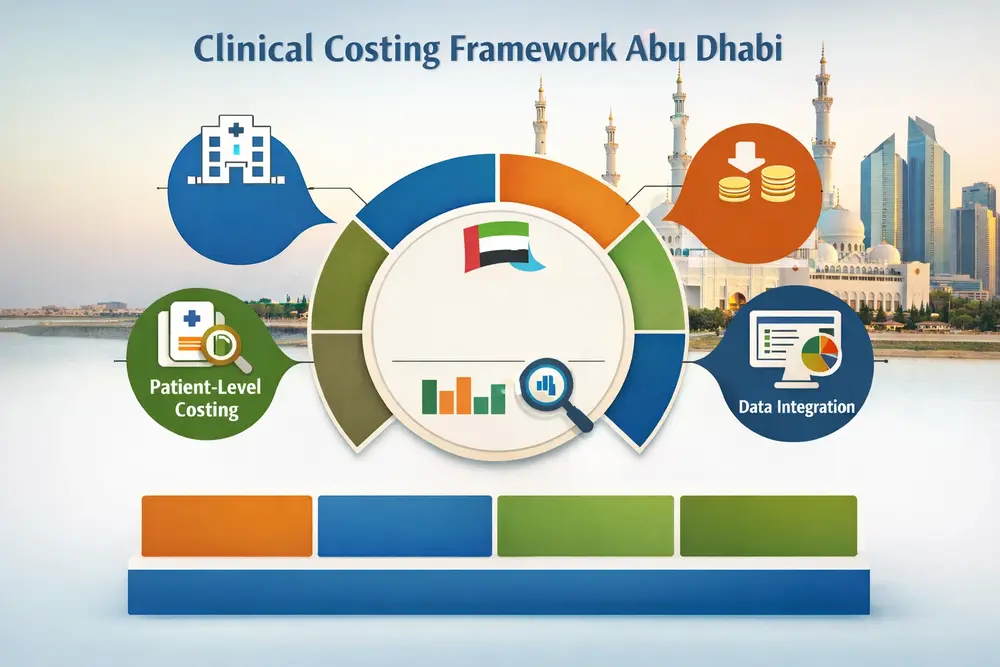
Healthcare organizations in Abu Dhabi operate in a highly regulated and rapidly evolving healthcare environment. To ensure transparency, efficiency, and accountability in healthcare financial management, hospitals and clinics must adopt structured financial reporting practices. One of the most important systems introduced to support this goal is the clinical costing framework Abu Dhabi.
By implementing a structured clinical costing system, healthcare organizations can improve healthcare cost reporting Abu Dhabi, optimize operational performance, and support better decision-making across all levels of hospital management.
The clinical costing framework Abu Dhabi is a structured financial model used by hospitals and clinics to measure the cost of healthcare services at the patient level. It integrates financial accounting data with operational and clinical information to calculate the actual cost of medical treatment and healthcare services.
Unlike traditional accounting systems that focus only on overall financial reporting, clinical costing focuses on detailed cost analysis of healthcare activities. This allows hospitals to identify how resources are used across departments and understand the true cost of patient care.
This approach strengthens healthcare financial management and improves healthcare cost reporting Abu Dhabi across healthcare organizations.
The clinical costing framework implemented in Abu Dhabi has several important objectives that support both healthcare providers and regulatory authorities.
One of the main goals of the framework is to improve healthcare cost reporting Abu Dhabi and strengthen financial visibility across hospital operations.
Accurate costing information helps hospital administrators make strategic decisions related to budgeting, service planning, and operational improvements.
The framework supports structured financial reporting and helps hospitals maintain reliable healthcare financial management processes.
By analyzing cost data, hospitals can identify inefficiencies and optimize resource utilization across departments.
Understanding how the clinical costing framework works in Abu Dhabi is essential for healthcare providers preparing for regulatory reporting. The framework combines financial data, clinical information, and operational activity to calculate the cost of delivering patient care.
The process typically involves several steps:
This structured process ensures accurate costing analysis and supports clinical costing compliance Abu Dhabi requirements.
The clinical costing framework Abu Dhabi includes several core components that healthcare providers must implement to ensure accurate cost reporting.
Hospitals must divide their operations into clearly defined departments using a structured hospital cost centre structure. Each cost centre represents a department or operational unit where expenses are incurred.
Typical healthcare cost centres include:
A well-defined cost centre structure supports accurate healthcare cost reporting Abu Dhabi.
Expense allocation distributes operational costs across departments and healthcare services.
These expenses may include:
Proper expense allocation strengthens healthcare financial management and helps determine the true cost of patient care.
Patient-level costing calculates the cost associated with treating individual patients or performing specific medical procedures.
This process helps healthcare providers understand:
This information improves budgeting and strengthens healthcare cost reporting Abu Dhabi.
Clinical costing requires data from multiple hospital systems, including:
Data integration supports reliable healthcare financial management and improves cost analysis accuracy.
Financial reconciliation ensures that clinical costing data matches the hospital’s financial statements.
This step ensures accurate clinical costing compliance Abu Dhabi and maintains consistency between accounting records and costing reports.
Benefits of Implementing the Clinical Costing Framework
Healthcare providers that adopt the clinical costing framework Abu Dhabi gain several operational and financial advantages.
Improved Healthcare Financial Management
Hospitals gain better control over operational expenses and can track departmental spending more effectively.
Enhanced Operational Efficiency
Cost analysis helps identify inefficiencies and improve hospital resource utilization.
Better Healthcare Planning
Reliable cost information supports strategic planning and operational decision-making.
Stronger Regulatory Compliance
Healthcare providers can meet reporting requirements established by the Department of Health – Abu Dhabi and maintain full clinical costing compliance Abu Dhabi.
Despite its benefits, implementing a clinical costing framework can present several challenges for healthcare organizations.
Complex Data Management
Healthcare organizations manage large volumes of financial and clinical data across multiple systems.
Inconsistent Data Quality
Incomplete or inaccurate data can reduce the reliability of costing reports.
Limited Technical Expertise
Clinical costing requires specialized knowledge in healthcare financial management and cost analysis.
Manual Reporting Processes
Hospitals relying on spreadsheets often face difficulties maintaining accurate and consistent reports.
Implementing the clinical costing framework Abu Dhabi requires expertise in both healthcare operations and financial management. Many healthcare organizations work with professional advisory firms such as Young and Right Accounting and Tax Consultancy to strengthen their costing processes.
Professional consultants help healthcare providers:
With expert support from Young and Right Accounting and Tax Consultancy, healthcare organizations can implement structured costing systems and maintain regulatory compliance.
The clinical costing framework Abu Dhabi plays a critical role in strengthening financial transparency and operational efficiency across healthcare organizations in Abu Dhabi.
By implementing structured methodologies, hospitals can improve healthcare financial management, enhance healthcare cost reporting Abu Dhabi, and ensure full clinical costing compliance Abu Dhabi with regulations established by the Department of Health – Abu Dhabi.
As healthcare systems continue to evolve, adopting advanced clinical costing frameworks will be essential for improving cost transparency, optimizing hospital operations, and delivering sustainable, high-quality patient care.


Get expert guidance to implement an effective clinical costing framework, improve healthcare cost reporting, and meet DOH compliance requirements
Schedule a Consultation