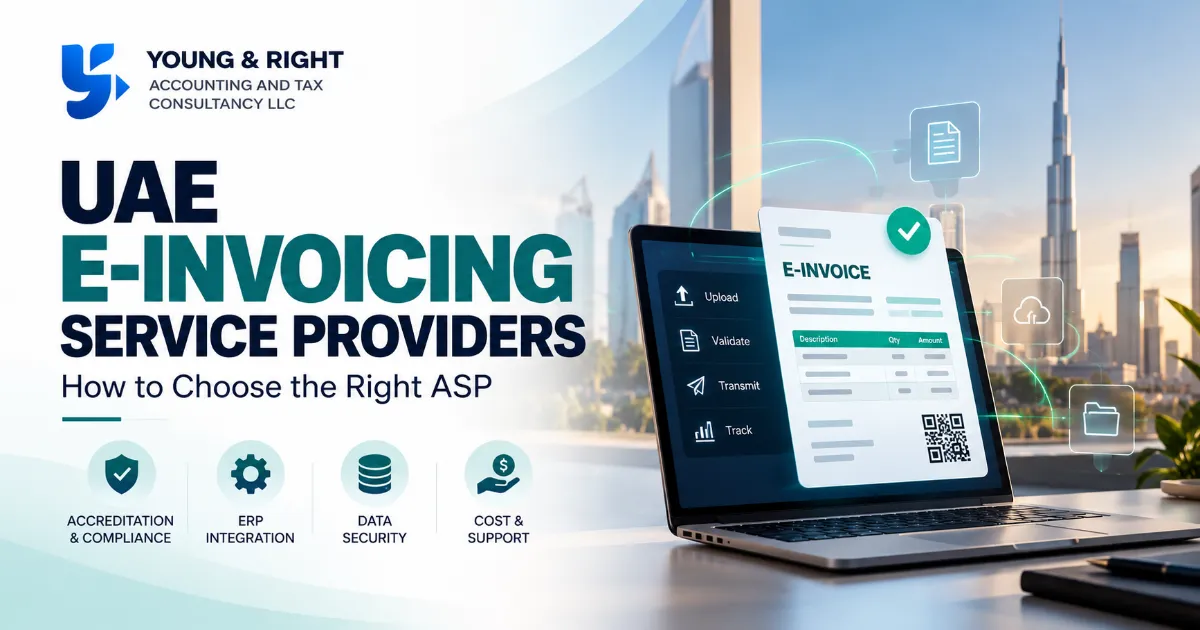
UAE E-Invoicing Service Providers: How to Choose the Right ASP in 2026
09/10/2026
From corporate tax registration to audits and bookkeeping, Young & Right offers personalized solutions that keep your business compliant and stress-free. Let’s take the complexity off your plate—starting with a free consultation.
Book Your Free Consultation

Healthcare organizations today operate in an environment where delivering quality patient care must go hand in hand with financial sustainability. Hospitals and clinics are expected to optimize resources, improve efficiency, and comply with regulatory reporting requirements while maintaining high standards of clinical care.
This is where clinical costing becomes essential.
Clinical costing provides hospitals with detailed insights into the actual cost of delivering healthcare services. Instead of relying on estimates, hospitals can accurately determine the cost of each treatment, procedure, department, and patient episode.
At Young and Right Accounting & Tax Consultancy, we specialize in providing professional clinical costing services for hospitals and healthcare facilities across the UAE. Our team helps healthcare providers develop accurate costing models, meet regulatory requirements, and make informed financial decisions that support long-term growth.
Clinical costing is the process of calculating the true cost of delivering healthcare services. It involves assigning all direct and indirect costs—including staff salaries, medical consumables, equipment, facility expenses, and overheads—to individual clinical services or departments.
The objective is to understand exactly how much it costs to provide each healthcare service, allowing hospitals to improve operational efficiency and financial performance.
1. Improves Financial Decision-Making
Hospital management makes hundreds of financial decisions every year.
Without accurate cost information, decisions are often based on assumptions.
Clinical costing provides reliable financial data that helps management:
Better information leads to better decisions.
2. Supports Regulatory Compliance
Healthcare authorities in the UAE increasingly require hospitals to submit structured financial and costing information.
Proper clinical costing helps hospitals comply with reporting requirements while ensuring consistency and transparency in financial reporting.
This reduces compliance risks and improves confidence during audits and regulatory reviews.
3. Identifies High-Cost Areas
Many hospitals know their overall operating expenses but struggle to identify which departments or services consume the most resources.
Clinical costing highlights:
This enables management to focus improvement efforts where they matter most.
4. Improves Resource Allocation
Healthcare resources are limited.
Clinical costing helps hospitals allocate:
more efficiently across departments.
Proper allocation improves productivity without compromising patient care.
5. Enhances Budget Planning
Preparing hospital budgets becomes significantly easier when management understands historical treatment costs.
Clinical costing supports:
Accurate budgets reduce financial uncertainty.
6. Improves Pricing Decisions
Hospitals need to understand whether their service pricing reflects the actual cost of care.
Clinical costing allows healthcare providers to:
This helps ensure long-term financial sustainability.
7. Measures Department Performance
Not all departments perform equally.
Clinical costing enables hospitals to compare:
These insights support continuous operational improvement.
8. Supports Better Strategic Planning
Hospital expansion requires reliable financial information.
Clinical costing assists management when deciding whether to:
Strategic planning becomes evidence-based rather than assumption-driven.
9. Improves Patient Care
Although clinical costing focuses on financial information, its ultimate goal is improving healthcare delivery.
When hospitals understand their costs, they can:
Better financial management ultimately supports better patient outcomes.
10. Supports Cost Transparency
Healthcare organizations increasingly need transparency in financial reporting.
Clinical costing creates clear documentation showing:
This improves accountability throughout the organization.
An effective clinical costing system generally includes:
Each of these elements contributes to calculating the actual cost of patient care.
Hospitals without structured clinical costing often experience:
Over time, these challenges can affect both operational efficiency and financial sustainability.
At Young and Right Accounting & Tax Consultancy, we understand the unique financial and operational challenges faced by healthcare providers in the UAE.
Our experienced team provides end-to-end clinical costing solutions designed to improve financial transparency, operational efficiency, and regulatory compliance.
Our services include:
Whether you operate a hospital, specialty clinic, diagnostic centre, or healthcare group, we deliver practical clinical costing solutions tailored to your organization's needs.
Conclusion
Clinical costing is no longer just a financial exercise—it is a strategic tool that helps hospitals improve efficiency, strengthen financial management, and deliver better patient care.
By understanding the true cost of healthcare services, hospitals can make informed decisions, optimize resources, improve budgeting, and maintain compliance with evolving regulatory requirements.
If your healthcare organization is looking to implement or enhance its clinical costing framework, Young and Right Accounting & Tax Consultancy offers the expertise, experience, and industry knowledge to help you achieve accurate, reliable, and compliant clinical costing across your organization.


Gain accurate cost insights to reduce expenses, optimize resources, and enhance your hospital's financial sustainability.
Talk to Our Healthcare Experts